Search results for: “easter”

  • Women’s Roles

    The role of women throughout history has been an interesting and controversial phenomenon, not least in the history of the church. However, despite often having been used as a tool for oppressing women over the centuries, the Bible has many positive things to say about the role of women.
     

    text

    WOMEN IN THE OLD TESTAMENT

    The most well-known Bible stories seem to involve men: Moses, Sampson, David and Goliath and Daniel in the lion’s den to name but a few. But there are many strong female characters whose stories are told less but are no less significant in Biblical history. For example:

    • Miriam, Moses’ sister. She played a significant part in saving Moses when he was a baby at risk of being killed by the Pharoah (Exodus 2). When Moses led the Israelites out of Egypt, Miriam has a significant role as a prophetess who led the people in their worship and praise of God
    • Deborah, the judge. Before Israel had kings, it was ruled by judges. Her story is found in Judges 4-5, where she is shown to be a strong warrior-like leader of her people.
    • Queen Esther. Her story is found in the Book of Esther. She is a Jew who marries the king of Persia, the head of the ruling empire. She plays a significant role in avoiding the massacre of her people.

    There are plenty of other women who are shown to have a strong faith in God, loyalty, and courage. For example, Rahab (Joshua 2), Hannah (1 Samuel 1), and Ruth (Book of Ruth).


    WOMEN IN THE NEW TESTAMENT

    Mary and Martha

    It is evident from the gospel accounts that Jesus had many women followers, as well as men. Two particular friends were the sisters, Mary and Martha, whose home he often stayed at with his disciples. One story tells how Mary sat at Jesus’ feet, the traditional posture of a disciple with their rabbi (Luke 10:38-42).

    This was not seen to be the usual place for women; they belonged in the home, looking after the men, and men did the serious learning. But Jesus commended her for her actions.

    The Woman of Samaria

    Jesus is regularly shown to have compassion for women who are rejected and abused by men. Two examples include the woman of Samaria in John 4. She is said to have had five husbands, a sign that she had been passed around by many men. Jesus meets her at a well and treats her with respect and dignity, offering her hope.

    The Woman Caught in Adultery

    The other example is the woman caught in adultery, found in John 8. She is dragged in front of Jesus by the religious rulers, who ask whether she should be stoned for what she has done. Jesus tells them, “He who is without sin should cast the first stone.” This was an act of mercy for her, and a criticism of the men who brought her to him.
    religious painting

    Women at the Crucifixion

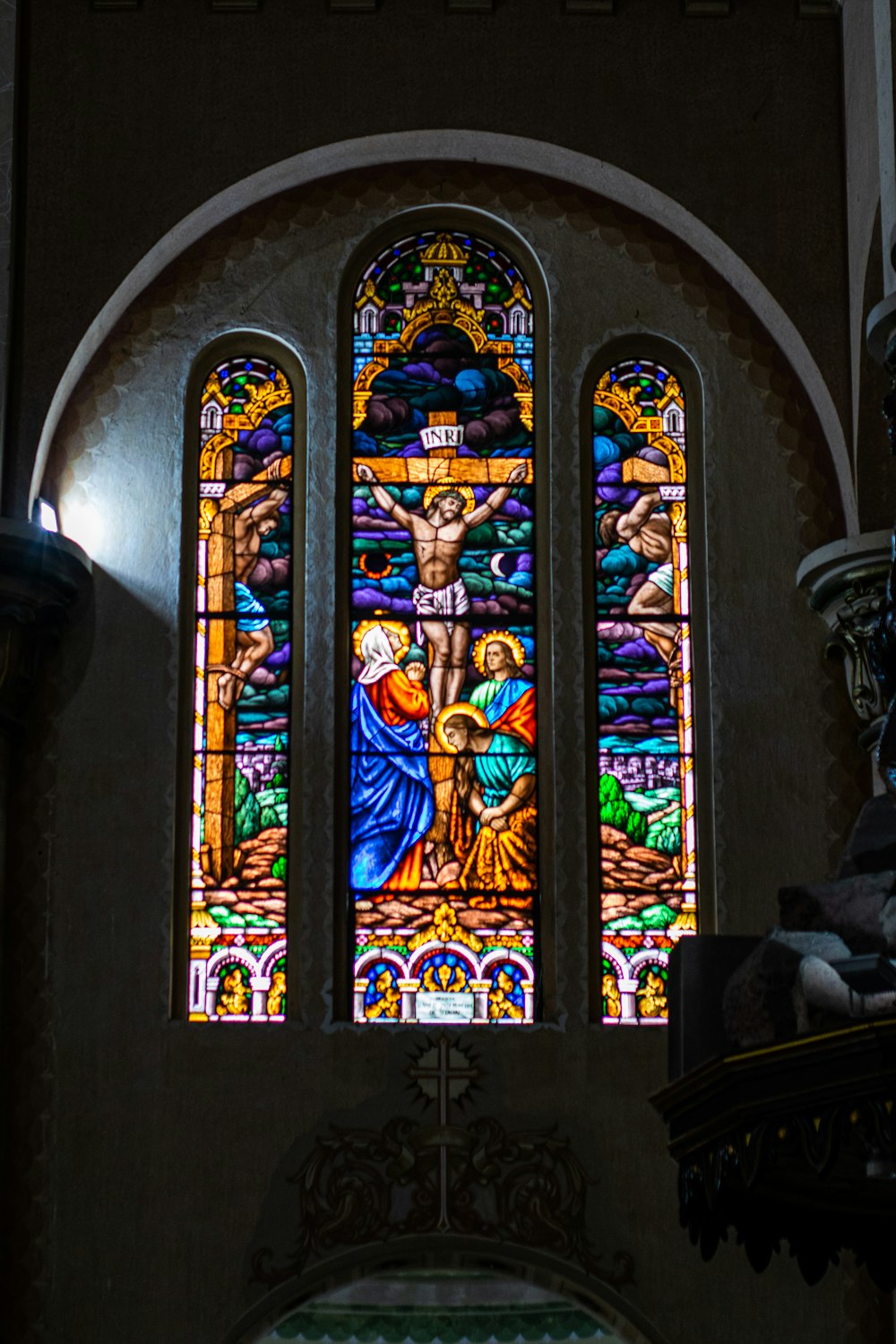
    Women also play a very important role in the story of Jesus’ death and resurrection. Although many of Jesus’ disciples deserted Jesus at the time of his arrest, the Bible says:

    “Many women were there, watching from a distance. They had followed Jesus from Galilee to care for his needs” Matthew 27:55

    They were the first ones to the tomb on Easter Sunday, arriving to anoint his body with spices (as was the tradition), and as such credited as being the first witnesses of the resurrection. This is radical and quite dangerous, given that at the time a woman’s testimony (account of an event) was not accepted by a court of law.

    Women in the Early Church

    The church in the 21st century has differing views on the place of women in the church, especially in regard to leadership. But there are many women named in the New Testament as having significant roles in founding and supporting churches. Lydia, for example, is a rich woman who founded the first church in Philippi (Acts 16).

    Priscilla helped mentor new Christians, along with her husband (Acts 18) and there is mention of a woman named Phoebe who ‘served the church’ in Cenchrea and is commended by the apostle Paul for her actions (Romans 16:1-2).

    Paul’s New Testament Letters

    Clearly, there are a lot of individual women in the first century who did remarkable things and held strong faiths. A lot of the debate around the role of women stems from various verses about women in general, and in particular their relationship with their husbands. Many of the letters to new churches, recorded in the New Testament, suggest that women should be subordinate to men, for example:

     “Christ is the head of every man, and the man is the head of a woman” 1 Corinthians 11:3

    “Let the women keep silent in the churches; for they are not permitted to speak, but let them subject themselves, just as the Law also says. And if they desire to learn anything, let them ask their own husbands at home; for it is improper for a woman to speak in church” 1 Corinthians 14:33-35

    “Older women… are to be reverent in their behaviour, not malicious gossips, nor enslaved to much wine, teaching what is good, that they may encourage the young women to love their husbands, to love their children, to be sensible, pure, workers at home, kind, being subject to their own husbands, that the word of God may not be dishonoured.” Titus 2:3-5
     

    Free Man in Black Suit Jacket Kissing Woman in White Wedding Dress Stock Photo

    WOMEN IN THE CHURCH TODAY

    Over the centuries, Christians have interpreted these verses to mean that women’s roles primarily involve looking after the home and family. Many have also rejected the idea that women can lead churches.

    However, more recently, many Christians have taken these verses in their original context; as words of advice to particular churches struggling with particular issues (e.g. women chatting in church and disrupting worship). Indeed, many churches have dismissed the idea that the Bible gives a universal ban on women teachers.

    Christians also understand that Jesus honoured women and that the only reason he didn’t have female disciples was that society would have frowned upon it. At the time, Israel was male-dominated (patriarchal); men made all the rules and women had no influence in society at all.

    Christians recognise that decisions about whether women can have an active role in church leadership should not be based on the lack of female leadership in patriarchal Ancient Israel.

  • Issues: The Media

    Free Vertical Shot of Watching Netflix on TV  Stock Photo

    Is it possible to imagine a world without the media? Think about your typical day. You might listen to the radio while in the car. You may walk everywhere but listen to a podcast or music streamed via the internet. You will inevitably pass billboards featuring large adverts wherever you go. Newspapers and magazines await you at the checkout of the local shops. A typical evening at home might involve checking Instagram on your phone while sitting in front of the TV. The media is everywhere, and it’s usually very loud.

    TV, radio, the internet, newspapers and magazines give us information at our fingertips. But not just information. It shapes our values and our culture through the messages it promotes. Newspapers have famously taken credit for influencing national elections.

    Films and TV programmes are regularly blamed for poor behaviour among young people. And increasingly, comments thoughtlessly written on social networking sites have led to tragedy. The media is a powerful force in the 21st century.

    As such, many Christians have questioned how they ought to respond to it. Is it an enemy, promoting values that are anti-Christian and mock the faith? Or does it provide an opportunity to speak to millions across the country, and even the world? Can it be an instrument for change and a force that can bring a lot of good?

    How do Christians respond to the media?

    In summary, there are three responses that Christians have made to the issue of the media.

    Some Christians protest against aspects of mainstream media. They see it as part of their Christian duty to stand up for what they consider good and true. High-profile examples might include the criticism of ‘Jerry Springer – the Opera‘, considered blasphemous in its depiction of Jesus, Mary and God. In its day, Monty Python’s ‘The Life of Brian’ was boycotted by Christians who felt it mocked the person of Jesus, his teachings and death on the cross. They may choose to avoid certain newspapers that contain material considered unsuitable (e.g. topless models).

    Premier magazines | Christian Magazines » Premier

    Some Christians may choose to create their own media channels, which contain more ‘wholesome’ material. Companies such as United Christian Broadcasters (UCB) and Premier Radio operate digital channels that provide programmes offering worship, discussion, and Bible teaching. There is a range of Christian magazines, for example, Premier Christianity magazine, which offers stories and articles related to the Christian life.

    Others, however, consider it important to contribute to mainstream media outlets and join in the debate and discussion they offer. The current Archbishop of York, Dr. John Sentamu, writes a regular column in The Sun newspaper. The BBC is bound to provide 155 hours of religious broadcasting as part of the license agreement. Many programmes that inform people about aspects of the Christian faith are produced by Christians themselves. These are often shown at Christmas or Easter times. Programmes here would probably draw a wider audience than those shown on exclusively Christian channels.

  • Interfaith Dialogue

    People of different ages and nationalities having fun together Premium Photo

    For many years, religion has been used to divide people. However, as Britain has become increasingly multicultural, there are more opportunities to build relationships with people from different faith backgrounds. There is increasing interest in exploring the common ground between faiths, rather than simply marking what makes faiths distinct, and working together for the good of local communities and the UK as a whole.

    In recent years, specific organisations have started up to do just this.

    The Christian Muslim Forum

    The Christian Muslim Forum is built on friendships between members of the Christian and Islamic faith. In 1997, the then-Archbishop of Canterbury George Carey said:

    “For the sake of the health of this country, we need to find ways in which members of our two communities can meet regularly together in a more structured way than has been possible up to now.”

    The Christian Muslim Forum is made up of members of the Muslim and Christian communities: Sunni, Shi’a, Anglican, Catholic, Baptist, Pentecostal, Methodist and Coptic Orthodox. It includes various traditions, Evangelicals, Deobandis, Barelwis and Sufis. They believe that:

    • The time is right for Christians and Muslims to develop strong and committed relationships
    • They can work together for the benefit of both faith communities and wider society
    • Faith is a resource for peace, conflict resolution, understanding and the valuing of all human beings
    • The friendship between people of different faiths is encouraged by their traditions.

    You can find out more about their work here.

    International Council of Christians and Jews

    This is an umbrella organisation that supports 38 Jewish-Christian organisations. According to its mission statement, it exists to:

    Promote understanding and cooperation between Christians and Jews based on respect for each other’s identity and integrity;

    Address issues of human rights and human dignity deeply enshrined in the traditions of Judaism and Christianity;

    Counter all forms of prejudice, intolerance, discrimination, racism and the misuse of religion for national and political domination;

    Affirm that in honest dialogue each person remains loyal to his or her own essential faith commitment, recognizing in the other person his or her integrity and otherness;

    Coordinate worldwide activities through a programme of carefully structured conferences held regularly in different countries. The participants examine current issues across national and religious boundaries, enabling face-to-face exchanges of experience and expertise;

    Encourage research and education at all levels, including universities and theological seminaries, to promote interreligious understanding among students, teachers, religious leaders, and scholars;

    Perform outreach in regions that so far have little or no structured Jewish-Christian dialogue, such as Eastern Europe, Africa, and the Far East;

    Provide a platform for wide-ranging theological debate in order to add a religious choice to the contemporary search for answers to existential and ethical challenges.

    You can find out more about their work here.

  • Jesus: The Incarnation

    There’s no denying Christmas holds a special place in many people’s hearts. But why? For some, it may be the chance to party with friends and family. Others might cherish the opportunity to reflect on the important things in life, like being generous to others. But for Christians, the reason is much more dramatic.

    The name gives a big clue to what makes Christmas so significant. ‘Christmas’ comes from ‘Christ’s Mass’, the Church’s traditional feast day to celebrate the birth of Jesus Christ. Birthdays always give good cause for a celebration. But Jesus’ arrival on earth is much more significant to Christians than the birth of an outstanding teacher and leader.

    For Christians, Christmas marks the arrival of God himself on earth, in the person of Jesus. This is known as the incarnation, which comes from the Latin word ‘carnis,’ meaning flesh.

    How does the Bible support this?

    The story of Jesus as ‘God in the flesh’ is found in the first four books of the New Testament. It is summed up in this verse from the Book of John, found in the New Testament of the Bible:

    ‘The Word [God] became flesh and dwelt among us’ John 1:14

    In other words, the God of the Universe – the all-powerful, all-loving Being who created the world and everything in it – chose to become a tiny baby. Although never ceasing to be God, he knew exactly what it was like to be a human, for good and for bad. He made friends; he found enemies. He knew joy and sorrow. He laughed and got angry. He experienced childhood, and as Easter reminds us, he died.

    Why did God visit the earth in human form?

    After all, a God might reveal themselves to people without ever having to limit themselves to a human body. Christians believe that Jesus’ time on earth is one episode in a much bigger story that goes back almost to the beginning of human existence.

    This is a story that begins with the episode often known as ‘the Fall’, found in Genesis. This is explained in greater detail elsewhere on the site, but essentially it is the belief that God made people be in a good relationship with him and the world around them, but that people chose to reject God, with dire consequences for all humans and the world around us.

    However, the Bible shows that God did not leave things here. He set up a pact or covenant with a chosen group of people, the Israelites. He called them to be a light to the world, to demonstrate a way of living that honoured Him and others. This episode is described in the story of Abraham and continues through Moses, to whom God gave His law.

    Prophecies

    The Old Testament is full of stories about this relationship between God and His people. Often, the Israelites got things wrong and rejected God’s commands. When this happened God spoke to them through prophets such as Isaiah and Jeremiah, urging them to return to the right path.

    But there are many prophecies in the Old Testament that hint that God had another plan in hand. The prophets talk about Messiah that God would send to be the final salvation for Israel and the wider world. One of the gospel writers, Matthew, refers to some of these prophecies when he describes the birth of Jesus. One of the most famous is found in Matthew 1: 23:

    ‘The virgin will conceive and give birth to a son, and they will call him Immanuel.’

    This verse comes directly from the Old Testament prophecy of Isaiah, Chapter 7:14. Immanuel literally means ‘God with us’. This is a promise, not just that God would send somebody special, but that he would come himself in human form, God ‘incarnate.’

    Salvation

    But why did God himself come to earth? What was wrong with using prophets to tell people what they needed to do to get right with God? The answer lies in what Jesus came to do.

    Christians believe that Jesus came to show the way to salvation, that through His death on the cross everyone can have a restored relationship with God, like the one God originally intended when He first created Adam and Eve, They believe that ultimately Jesus came to BE the way to salvation. This is known as atonement.

    Christians believe that, since the Fall, all humans are sinful, living in a way that rejects God. They believe that there is a price to pay for this sin, but that because God is loving and merciful, He found a way to pay that price on our behalf. Only a perfect human could pay the price for humankind’s sin, and so Jesus, who was God, came to be that perfect sacrifice. There are some verses found in John’s gospel that sum up this belief:


    “For God loved the world so much that He gave His only Son, so that all who believe in him may not die, but have eternal life. For God did not come into the world to condemn the world, but to save the world through him.” John 3:16-17

    In other words, Jesus came because God loves the people he made. Because of Jesus, every person can know a new life with God.

    Why is the incarnation important?

    The incarnation is important theologically, as a way of explaining how God’s big salvation plan works. But for Christians, it is also important on a more personal level.

    Different people think of God in different ways. Some may think of God as a remote force that is ‘out there,’ something that started the world and then took a back seat. Some may think of God as a judge who sits on a throne in heaven, rewarding good behaviour and punishing wrongdoing.

    But Jesus taught that if people have seen Him, they have seen God (John 14:9). So Christians believe that if they want to know what God is like, they need look no further than the stories of Jesus found in the Bible.

    How does this help Christians?

    This picture provides comfort to many Christians. Jesus is a model of compassion, healing the sick and bringing sight to the blind. He notices people that everybody else overlooks, for example, children, the disabled. He speaks in a language that people can understand, using everyday images and situations in his teaching. He knows what it means to make and to lose friends.

    And, perhaps most comforting of all, Jesus knows what it means to suffer. The Easter Story shows how Jesus is betrayed by a friend and abandoned by the rest. He is misunderstood. People lie about him. He is humiliated. And then he feels the pain of death. So when Christians pray, they believe that they are talking to somebody who understands what they are going through in their best and worst times. The Letter to the Hebrews, found in the New Testament, puts it this way:

    “For we do not have a high priest who is unable to empathize with our weaknesses, but we have one who has been tempted in every way, just as we are—yet he did not sin. Let us then approach God’s throne of grace with confidence, so that we may receive mercy and find grace to help us in our time of need.” Hebrews 4:15-16

  • Charity: Samaritan’s Purse

    Samaritan's Purse Career: Working at Samaritan's Purse | Glassdoor

    Samaritan’s Purse (UK & Ireland) is an international relief and development organisation that works through local churches to proclaim and demonstrate the love of God amongst communities in need in 18 countries across Africa, Eastern Europe and Central Asia.

    The organisation was founded after World War II, when Bob Pierce, an evangelist and journalist with Youth For Christ, began traveling throughout Asia for work.

    While in China he stumbled across some courageous women who were living among leprosy sufferers and orphans, sacrificing everything to share the love of Jesus Christ. Through their selfless love, God gave Pierce a vision for ministry. He dedicated himself to finding and supporting other such Christians who were caring for the poor and suffering across the world.


    Samaritan’s Purse UK

    Billy Graham launched Samaritan’s Purse UK in 1990 following his visit to Scotland. After just twelve months, Samaritan’s Purse UK had a support base of over four thousand people from a cross-section of individual Christians and churches in the UK.

    Operation Christmas Child – Samaritan's Purse - Chadwick Textiles - Brand Quality Teamwear

    In 1995, Operation Christmas Child, a children’s charity, announced its merger with Samaritan’s Purse. Since 1995, the organisation has gone from strength to strength, starting new development initiatives in Africa and Central Asia. It also takes part in the global Samaritan’s Purse response to humanitarian disasters such as the Darfur Crisis, the South Asian Tsunami, the Pakistan Earthquake, the Myanmar Cyclone, and the China Earthquake.


    What does Samaritan’s Purse do?

    Free Children Standing next to Manual Water Pump Stock Photo

    When disaster strikes Samaritan’s Purse is often one of the first agencies to respond with mobilised Disaster Assistance Response Teams (DART). Speed is of the essence to prevent survivors from further danger, give medical assistance to the injured, vaccinate people, along with providing the basics of food, clean water, shelter and sanitation.

    • Samaritan’s Purse supports and facilitates projects to provide:
    • Safe water supplies through access to clean water or filtration systems.
    • Sanitation and Hygiene training and workshops.
    • HIV awareness, understanding and training.
    • Improved health and nutrition, education and human rights support to orphans and vulnerable children.
    • Livelihood projects including business enterprise, savings and loan schemes, production improvement and technical and financial management skills.
    • Supporting the elderly and disabled with practical help of home repairs, cooking, companionship and income generation activity.

    You can find out more about the charity’s work here.

  • Jesus: Evidence for His Existence

    Amongst the most important evidence for the existence of Jesus is the historical evidence: in the life, death, and resurrection of Jesus of Nazareth. People today may say that Jesus was just a mythical figure, or that we do not really know anything about Him. So it is important that we understand how reliable the historical evidence is.

    Clearly, something unusual happened in western Asia about two thousand years ago. How else are we to account for the origin and growth of Christianity, a movement that, in less than four centuries had grown from its obscure origins to become the official religion of the Roman empire?

    There are many writers from the time who mention Jesus and the early Church, with the following representing just three.


    Free Roman Emperor Statue Stock Photo

    EVIDENCE OUTSIDE THE NEW TESTAMENT

    The impression is sometimes given that the only evidence we have for the origins of Christianity comes from the New Testament itself, and secondary Christian sources (and, by implication, this evidence is not to be trusted because it is biased in favour of the Christian message).

    It is true that there aren’t many references to Christian origins outside of the New Testament and the Church. This should not surprise us – the documents available to us today must only be a tiny fraction of all those written at the time and a fairly random selection at that. R. T. France cites the case of Tacitus, the Roman historian, for which we only have two manuscripts, covering only half of what he is believed to have written. Not only that, but the earliest stages of the Christian movement were obscure and ‘low profile.’

    They took place in an unimportant province on the Eastern edge of the Roman Empire. However, there are at least half a dozen non-Christian (i.e. Roman or Jewish) sources that refer to Christian origins. These are sufficient to provide some confirmation of the historical picture that is painted by the New Testament.


    TACITUS

    Tacitus was a Roman historian. His ‘Annals’, written soon after 115 AD, mention the emperor Nero’s persecution of the Christians in Rome in AD 64. This was the year of the great fire that damaged Rome. There were suspicions that the emperor himself had started the fire. This is what Tacitus says (Annals 15:44):

    ‘To dispel the rumour, Nero substituted as culprits and treated with the most extreme punishments, some people, popularly known as Christians, whose disgraceful activities were notorious. The originator of that name, Christus, had been executed when Tiberius was emperor, by order of the procurator Pontius Pilatus. But the deadly cult, though checked for a time, was now breaking out again not only in Judea, the birthplace of this evil but even throughout Rome, where all the nasty and disgusting ideas from all over the world pour in and find a ready following.’

    Notice the following points from Tacitus:

    • Christ was executed while Tiberius was emperor (14-37 AD)
    • He was executed by order of Pontius Pilate (procurator from 26-36 AD)
    • His movement had its origins in Judea
    • There were Christian believers in Rome by AD 64 – enough to be a scapegoat for the emperor Nero.

    This comes from an unsympathetic pagan writer.


    PLINY

    Pliny was the governor of the Roman province of Bithynia, in present-day Turkey. In about 112 AD, he wrote (in Epistles X.96) to the emperor Trajan, asking for advice on how to deal with the Christians in his province, because he was executing so many of them. Pliny wrote:

    ‘They were in the habit of meeting before dawn on a fixed day. They would recite in alternate verse a hymn to Christ as to a god, and would bind themselves by a solemn oath, not to do any criminal act, but rather that they would not commit any fraud, theft or adultery, nor betray any trust nor refuse to restore a deposit on demand. This done, they would disperse, and then they would meet again later to eat together (but the food was quite ordinary and harmless.)

    Notice that Pliny says:

    • By the beginning of the second century, there was a Christian community in Bithynia large enough to come to the attention of the Roman governor.
    • They worshipped Christ as a God


    SUETONIUS

    Suetonius was a Roman historian and an official under the emperor Hadrian. In his ‘Life of Claudius’, he says:

    ‘As the Jews were making constant disturbances at the instigation of Chrestus [= Christ?], he [Claudius] expelled them from Rome.’ This expulsion took place in AD 49, and is identified with the event described by Luke in Acts 18:2 In his ‘Lives of the Caesars.’ (25:4)

    Suetonius also writes about the fire of Rome in AD 64:

    ‘Punishment by Nero was inflicted on the Christians, a class of men given to a new and mischievous superstition.’ (26:2)

    Although Suetonius does not provide direct historical evidence for Christ, he does provide evidence for the existence of a significant Christian community in the capital of the empire by the 60s AD, the period just after the end of the book of Acts, some thirty years after Jesus’ crucifixion and resurrection.

    You can read more historical evidence for Jesus’ existence by clicking on the links below:

    These pages have been produced by David Couchman MA (Cantab), MSc. The material is taken from the Facing the Challenge course and is used with permission. 

  • Cornish Saints


    St. Germanus

    Feast day: 31st July St. Germanus was elected Bishop of Auxerie, France, in 4l8 CE at the time that the Roman Empire was falling apart. He was twice sent to Britain to argue against the false teachings of Pelagius. On his second visit, there was an attack by a group of pagan raiders, he encouraged the defenders to shout ‘Alleluia’ loudly. The attackers thought they were outnumbered and ran away.

    St. Germanus taught St. Patrick (Patron Saint of Ireland) and founded a monastery and church at St. Germans, which came to serve as Cornwall’s cathedral for many years. He also visited the shrine of St. Alban’s to pray.

    St. Neot

    Feast day: 31st July

    St. Neot was a monk who studied at Glastonbury Abbey. He became an advisor to King Alfred the Great and it is in a book about St. Neot that we read about King Alfred burning the cakes when hiding from the Danes at Athelney. St. Neot travelled to Cornwall where, seeking a life of solitude, he started a hermitage – a monastery where monks each lived alone in their rooms.

    St. Petroc

    Feast day: 4th June

    St. Petroc was a Welsh nobleman who was educated in an Irish monastery and then sailed with a small band of followers to Camel estuary. He arrived in the estuary and built a church at Padstow with a Celtic monastery as a centre for spreading the Christian faith. In his travels, he also started churches in Bodmin and Little Petherick, as well as in many parts of Britain, Wales and Brittany. King Constantine ruled the area at this time and was said to have been converted to Christianity by St. Petroc when he rescued the deer that the King was hunting.

    There are many legends about St. Petroc’s healing, miracles and banishing monsters. He was buried at Padstow. In the 12th Century, St. Petroc’s Church in Bodmin got his relics and put them in a painted ivory casket, which can still be seen today. Some people regard St. Petroc as the Patron Saint of Cornwall.

    St. Sampson

    Feast day: 28th July

    St. Sampson was the son of a Welsh Chieftain who became Abbot of Caldey Island near Tenby and visited Ireland before being ordained a Bishop by St. Dubricius.

    At Easter time St. Sampson saw an angelic vision who told him to leave the country and across the sea. Travelling with three cousins and other friends he crossed Cornwall, coming to a monastery at Lau Docco and then on to Fowey.
    Wherever he went he was said to have ‘by God, given sight to the blind, healed many lepers, cast out devils and saved many wandering in error.’

    Passing through the Hundred of Trigg (also known as Triggshire was one of ten ancient administrative shires of Cornwall) he came across a group of people worshipping an idol with music and dancing. He converted them to Christianity through his words and a miraculous healing and they were all baptised. His biographer wrote about the place where it happened. ‘On this hill I have myself stood, and worshipped; with my fingers, I have traced the sign of the cross which Saint Samson by his own hand carved with an iron tool on a standing stone.’.

    Saint Sampson stayed there some time, living in a cave from which a spring of water flowed. He started a monastery there, which he left in the care of his father. He travelled on to Brittany, where he founded another monastery and church, which became the Cathedral of Dol.

  • Captain Ernest Gordon

    Rivre Kwai

    The infamous bridge over the River Kwai, also known as the Death Railway, can be found in Western Thailand, on the border with Myanmar.

    During WWII, Japan constructed the 250 miles railway line from Ban Pong, Thailand to Thanbyuzayat, Burma. The Japanese wanted the railway line to transport goods to India, as part of their planned attack on the country. The bridge was built by prisoners of war and Asian slave labourers, who were kept in some of the worst conditions known in the war.

    One of these prisoners was Ernest Gordon…


    CAPTAIN ERNEST GORDON

    Free Shallow Focus Photography of Brown Barbed Wire Stock Photo

    Ernest Gordon was born in Scotland in 1916. During World War 2 Gordon became a company commander with the 2nd Battalion, Argyll and Sutherland Highlanders. After the capture of Singapore in 1942, he and some other soldiers escaped to Java, attempting to sail several thousand miles from Padang to Sri Lanka. They were eventually captured by the Japanese and marched into the jungles of Thailand, where they were forced to build the bridge over the River Kwai.

    Ernest spent three years in the Japanese prisoner-of-war camp surviving horrendous conditions. The Japanese were very cruel, ignoring the rules of the Geneva Convention, which stated that all prisoners of war should be treated well. They punished prisoners whenever and however they wanted.

    The man in charge – the camp commandant – was particularly cruel.


    FINDING FAITH ON DEATH WARD

    The Death Ward was the building used for those prisoners of war who were believed to be close to death and would not survive. During his imprisonment, Gordon underwent torturous events including malnutrition, malaria, diphtheria, typhoid, beriberi, jungle ulcers and an operation to remove a kidney without pain relief. All of this led him to be sent to the Death Ward.

    Here he was treated by two soldiers: a Methodist named ‘Dusty Miller’, and a Catholic known as ‘Dinty Moore’. The two gave 24-hour care to Ernest. They would boil rags and clean and massage Ernest’s diseased legs every day. To everyone’s great surprise Ernest survived.

    Up to this point, Ernest had said that he wasn’t sure whether God existed or not. But he was very impressed by the faith he saw at work in the lives of these two men. Ernest saw that this example of real Christian faith survived and brought courage even when faced with the severe treatment of their captors. This encounter with a loving, sacrificial faith gave Ernest new hope and a new sense of purpose.


    GREAT SACRIFICE AMONG THE PRISONERS

    But it wasn’t just Ernest who was touched by it. There were other acts of great sacrifice that began to shine through the darkness. Once, after a work detail, a guard believed a shovel had gone missing. He told the men that unless the culprit confessed, all the men would be killed. A soldier stepped forward and stood to attention.

    He was beaten to death by the guard. It was later discovered that there was no missing shovel, but the guard had simply made a mistake when counting them.

    As Ernest gained strength, he started a university in the camp in order to add purpose and direction to the lives of the men. At first, the school was held in secret, but eventually, the Japanese allowed it to be held in the open.


    AFTER THE WAR

    After the war, Ernest returned to Scotland where became an ordained minister of the Church of Scotland in 1950. He later moved to the USA where he became the Presbyterian chaplain of Princeton University in 1954, then dean of the chapel in 1955.

    In 1981 he moved to Washington DC where he took up the post of the president of CREED: the Christian Rescue Effort for the Emancipation of Dissidents. In this role, Ernest helped several hundred dissidents, people who were imprisoned because of their beliefs, often just because they disagreed with their government.

    He helped them to get out of prison in Eastern Bloc countries, such as Hungary, Romania, and Bulgaria. He knew firsthand the conditions such people had to live under and he understood the importance of helping them to freedom. Ernest also traveled around the world, serving as a visiting lecturer at the University of St. Andrews, Moscow State Open University, and International Christian University in Tokyo.

    He also travelled around the world, lecturing and talking about his experiences, before passing away in 2002 at the age of 85.

  • Christmas: Advent

    Free Side view of smiling African American female with Xmas sock in shop with decorative baubles and gifts Stock Photo

    In this guest blog, Rachel explains what makes advent such a special time for her.

    “Christmas seems to get earlier every year. This year, I noticed the Christmas range on the shelves of my local supermarket on November 1st. It was as if the manager had cleared away the Halloween bits and pieces and put the Chocolate Oranges where the pumpkins had been sitting only 24 hours before.

    “Over the next couple of weeks, ‘Merry Christmas Everyone,’ by Shakin’ Stevens found its way onto every shop playlist. Christmas had truly arrived.

    “When everything proclaims that Christmas is here already – even in November – it can be easy to miss the beauty of advent. Advent is all about the wait. It’s a season in its own right which begins four Sundays before Christmas Day, when Christians celebrate Jesus’ birth. Many people will have an advent calendar to help them count down the long days towards December 25th. And in churches up and down the country, hundreds of thousands of Christians take time to reflect on the long journey to Bethlehem, where Jesus Christ was born 2000 years ago.

    “This journey began, not with a donkey or even an angel in Nazareth, but as far back as the garden of Eden. That was the time, soon after man’s arrival on earth, when things began to go wrong and the rule of sin took over. It was the time when it became clear that the world needed a Saviour, somebody who could put things back on track.

    “The Old Testament shows this journey continuing with God’s people, who were called to live in a way that showed a watching world what true love and justice looked like. But no matter how they tried, they could not live up to the calling. So the ancient prophets proclaimed that God would send His own servant to show people the way, living a life that was right with God and with fellow humankind. So for hundreds of years, the people waited for this ‘Messiah,’ until one day, in a small town of no special importance, an angel appeared to a young unmarried woman and shared the world-shaking news that the Son of God was to be born through her.

    Free Scene of Birth of Christ Stock Photo

    “Waiting is often seen as a bad thing in our culture. We have microwaves and fast-food restaurants so that we can get a meal instantly. We download songs we like via our phones the same minute that we hear them. But in advent, the wait for Christmas is a good thing. It’s not just about looking forward to a big party and lots of presents to maximise your excitement levels.

    As with Lent, it is a time to prepare the heart. Pressing ‘pause’ on a busy life to marvel again at this historic event that changed the course of the world, when God himself came to earth in human form – the incarnation – to ‘seek and save that which was lost.’ (Luke 19:10)

    And remembering that this same God, who came to do wonders on earth 2000 years ago, wishes to do this today in those who wait for Him. In the words of my favourite carol, O Little Town of Bethlehem:

    ‘No ear may hear His coming, But in this world of sin, Where meek souls will receive him Still the dear Christ enters in.’

  • Community Worship

    What is Worship?

    Most people have experienced some form of community worship at some time. Whether that’s in a religious building, a prize-giving ceremony, a school assembly with a thought for the day or even celebrating together at a football match or gig. You get excited and can’t help shouting out for joy!

    It’s the same for Christians; they get excited about how good God is and this results in them worshipping him.

    How do Christians worship?

    Sometimes they worship God on their own; other times with a group of friends. Every Sunday, and at other times of the week, Christians worship God together in church.

    Each church worships in its own way; the style isn’t important. What is at the heart of the worship is the important thing: Love for God.

    Worship can be structured, having a fixed form of words and prayers, which is known as liturgical worship. Priests may use incense, choirs may sing hymns and communion might be celebrated (also known as the Eucharist).

    Some churches have worship that is less structured, which is known as non-liturgical worship. They will include music that is led by a band, complete with drums and electric guitars. People may pray out loud, read from the Bible. dance and clap. Sometimes there can be a party atmosphere, especially if it’s a special time of year like Easter or Christmas.

    Some churches, such as the Quakers, meet in silence and speak or sing when they feel God prompts them to.

    Why do Christians have community worship?

    By worshipping together the church community experiences fellowship with God and each other. In the words of St Paul come together as “the body of Christ”.

    Christians believe that it’s important to encourage each other, pray for each other, support each other and help each other in their journey of faith.

    Spending time with people is a very human thing to want to do. Worshipping together provides a sense of connectedness for Christians. It helps them to love one another, and others in their community. It also reminds them of the wider world community, that, ultimately, they are brothers and sisters together in God’s family.

    You can find out more about different types of community worship here.

More posts